Steam AI Clone Threats: Indie Developers Get $200 Extortion Emails, and Valve Responds
Indie developers are told to pay $200 or see an AI clone of their game released first. What Valve says, and how Steam's AI rules work.
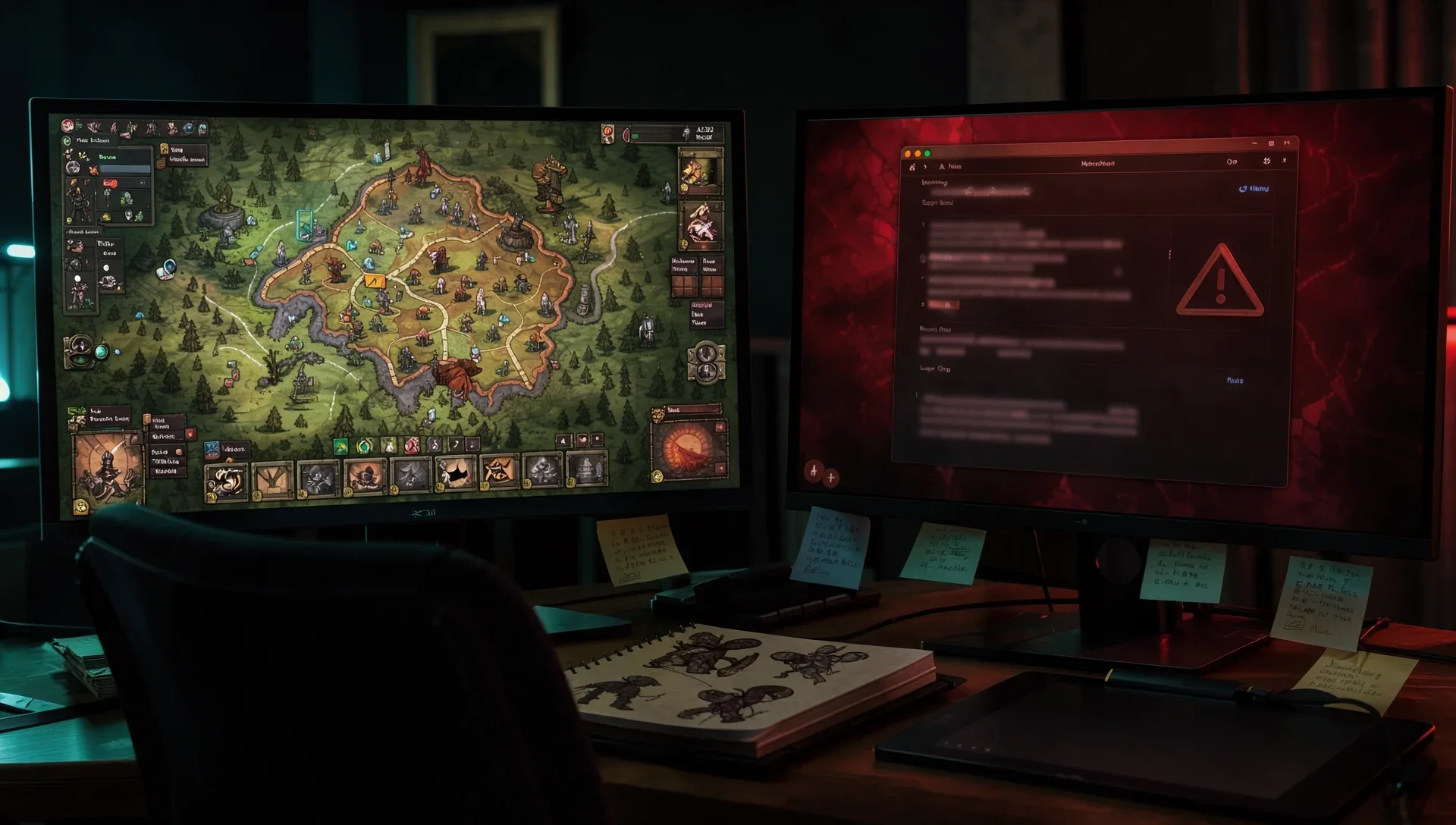
An indie developer working on a Steam strategy RPG was told to hand over $200 in Steam items within 24 hours, or an AI-made copy of his game would be released on Steam before it. He refused, and he is not the only one to get an email like it. Valve has now been asked about it directly, and its answer is clear on one point: it will not decide which tools developers are allowed to use.
What happened
The developer is Takashi Mochibe of Studio At Home, who is making Dragon's Chronicles: Twin Stars of Reginleiv, a tactical RPG aimed at a Steam release in 2027, according to Korean outlet Gamemeca. Inven Global reports that he made the email public on his X account on 18 October.
According to the email Mochibe shared, the sender claimed to have already built a similar game with AI tools and to be ready to put it on Steam first. The clone would stay unreleased, the sender said, if Mochibe paid Steam items worth $200 within 24 hours. The sender also claimed to have attached a video as proof, but Gamemeca reports that no video was included.
Mochibe did not pay. He argued that an SRPG built on detailed level design and deep strategy cannot simply be cloned with AI, and replied that he would happily buy the clone if it turned out to be more fun. "If you looked at the store page and genuinely thought you could copy this, you must have nerves of steel," he wrote, as quoted by Inven Global. He suggested the email was probably spam sent at random to indie developers, and warned others to be careful.
It isn't the first email like this
Inven Global traces the same threat back to late September. On 30 September, Weasel Pit, the developer of Iron Pilgrim, posted that someone had cloned the game with AI and demanded $200 worth of Steam items within 24 hours. That case is murky: Inven Global reports that media and online communities later raised suspicions it was staged to win wishlists, after the developer's Reddit history showed the same kind of threat posted on another indie developer's thread weeks earlier.
The tactic then spread. On 2 October, Psicodart Games, the developer of the action roguelike Circusar, said it had received a similar email, according to Inven Global.
The fear behind it is real, even when the threat is a bluff. Game Developer reports that Digital Sun, the studio behind Moonlighter, is delaying a public playtest of its next game, ReVamp, over concerns that AI clones could beat it to launch. Gamemeca adds that the developer of the Japanese strategy game Project Solaris said it would share fewer development updates for the same reason.
What Valve says
Valve was asked about the threats at Steam Indie Connect, a developer event in Busan, South Korea, on 27 October, co-hosted with the Busan Indie Connect Festival Organizing Committee and the Korea Creative Content Agency. A developer described the extortion emails and asked whether Steam had any protection in place. The answers below come from Inven Global's report of the session, which was originally written in Korean and translated into English.
Tom Giardino of Valve's Steam business team said he was hearing about such extortion cases for the first time, then set out Valve's position on AI tools.
We don't want to be gatekeepers telling developers which tools they should or shouldn't use.
— Tom Giardino, Valve
On the extortion itself, Giardino said it is more a matter for law enforcement than for a gaming platform, but he kept the door open. "If you report such cases to us, we want to look into them and help in whatever way we can," he said.
He also pointed out that clones existed long before AI, which has simply sped things up. His advice to developers was twofold: build a community that trusts you, and keep improving the game. He compared it to Valve's long-standing approach to piracy, where the aim is to make the real product the best version rather than lean on heavy protection.
Rather than relying on a single mechanism that someone can easily copy, you must continue to grow your game by adding features, personality, and creativity that stem from your own perspective as a developer.
— Tom Giardino, Valve
His colleague Marc Wilkinson addressed the flood of low-effort games in Steam Next Fest. During the first two days, he explained, games are shown to players almost at random so that every entry gets a fair chance, and personalised recommendations take over after that. "We recognize that as a trade-off, some low-quality games get exposed," Wilkinson said, adding that Valve is fully aware of the situation and that many of its staff are thinking about how to fix it.
"We don't think we're perfect and there is plenty of room for improvement," Giardino said, but Valve's starting point is to make Steam smarter rather than restrict developer access. Game Developer's reading is that Valve has put the onus on developers to prevent cloning themselves. The scale is not small: PC Gamer notes that nearly 23,000 games had been released on Steam in 2026 by late October.
How Steam's AI disclosure rules work
Steam does not ban AI-made games. Instead, its Content Survey, which every developer fills in before a game is reviewed, has a section on generative AI. Valve's own Steamworks documentation splits it into two types:
- Pre-generated: content that ships with the game and is made with the help of AI tools during development, such as artwork, sound, narrative or localisation. Valve says it reviews this output the same way it reviews non-AI content.
- Live-generated: content created by AI while the game is running. On top of the same rules, developers must tell Valve what guardrails stop the AI from generating illegal content.
AI tools used only to work faster are not the focus of the survey, Valve says. Live-generated adult-only sexual content is not allowed at all for now. Valve also says the survey answers help customers understand how a game's content matches their expectations.
The rules matter for clones in one specific way. Under the Steam Distribution Agreement, developers promise Valve that their game contains no illegal or infringing content, and the AI disclosure does not change that. As Valve's own FAQ puts it, games must follow the content rules "regardless of whether it is disclosed in these surveys."
The wider fight: Sweeney vs Valve
The disclosure labels themselves are a separate argument, and Epic Games boss Tim Sweeney is their loudest critic. In an earlier interview he said, "I think it's really irresponsible of Valve," and in late October he went further on X, saying the label forces developers to write "a political statement to be used against them by the hate mob," Notebookcheck reports. Notebookcheck counts nearly 1,700 of the more than 8,600 demos at Steam Next Fest carrying the AI label, and notes that Valve has not responded to his criticism.
That debate is about honesty towards players, not theft. A label tells buyers that AI was used; it does nothing to stop someone copying another studio's game.
What developers can do
- Don't pay. Mochibe and other developers have urged anyone who gets one of these emails never to send money or meet the demands, Inven Global reports.
- Report it to Valve. Giardino asked developers to send such cases to Steam so Valve can look into them.
- Treat extortion as a crime. Valve's view is that the threats themselves are a matter for the police.
- Use Steam's copyright and trademark forms. Valve's Steamworks FAQ points rights holders whose work is copied to its DMCA copyright infringement form and its trademark complaint form.
- Think about what you share, and with whom. Israel Mallén of Digital Sun has suggested, as reported by PC Gamer, that storefronts could help by giving developers "more tools to vet who gets access" to pre-release builds, such as account age, playtime or review history. PC Gamer doesn't expect changes like that soon, and some studios are holding back demos instead.