Zelda: Ocarina of Time Remake Is Out: Reviews, What's New, the Price and What Nintendo Kept
The Ocarina of Time remake is out on Switch 2 for $59.99 and scores 96 on Metacritic. What reviewers say, what's new and what stays the same.
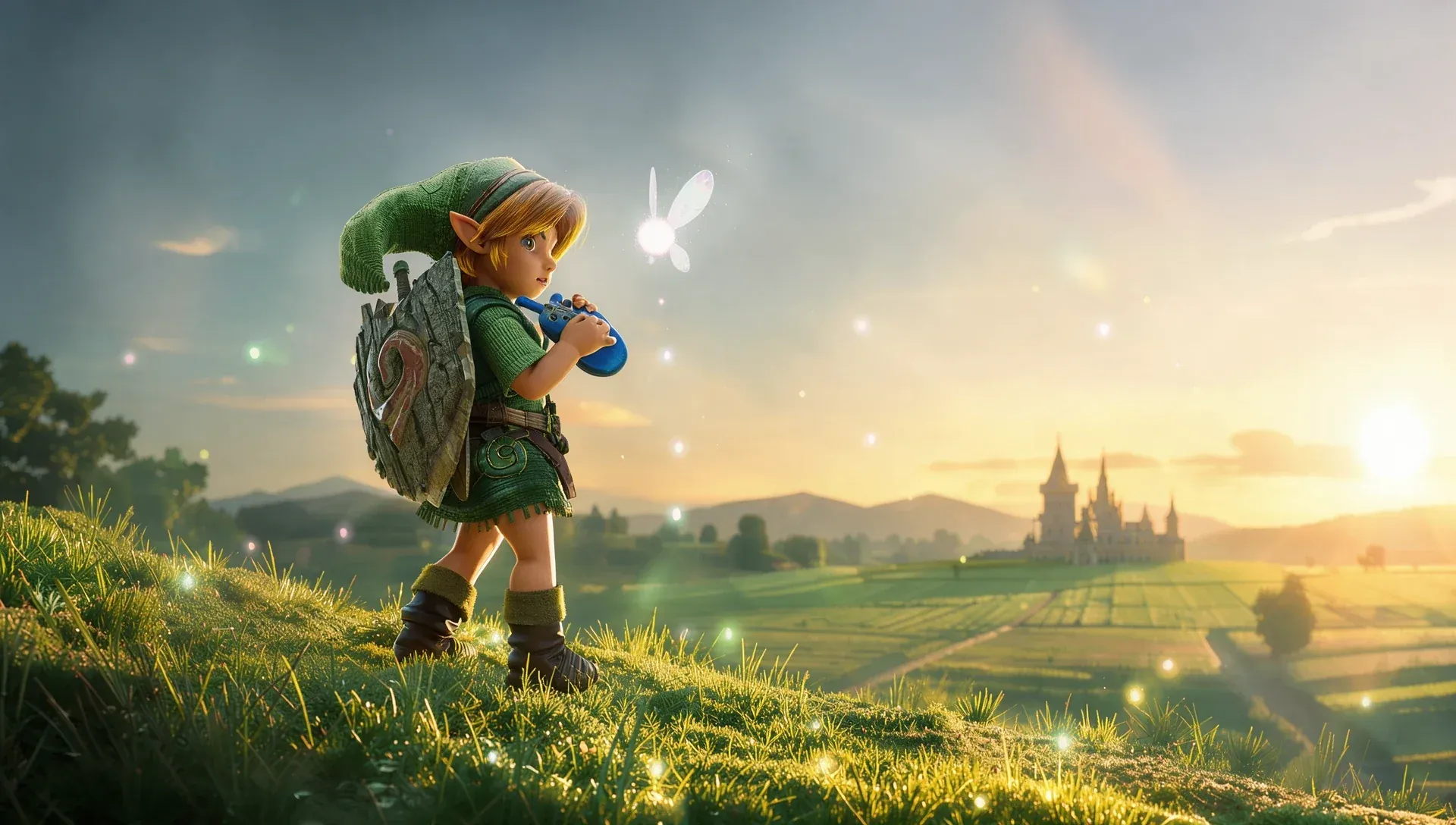
The Legend of Zelda: Ocarina of Time returned on Thursday 5 November as a full remake for Nintendo Switch 2, 28 years after the Nintendo 64 original. Ahead of launch, Nintendo published a four-part Ask the Developer interview with the team behind it, and their guiding rule is simple: "the visuals may change, but the experience does not."
That means a completely rebuilt Hyrule, voice acting and modern controls, but the same structure, dungeons and characters players remember.
Update, 5 November: the reviews are in
The remake is out now, and critics love it. On launch morning it held a Metascore of 96 on Metacritic from more than 80 critic reviews, none of them mixed or negative: three points under the Nintendo 64 original's 99.
- Destructoid gave it 10/10, calling it "a must-play, whether you're a franchise fan or not". Its reviewer spent more than 25 hours on a first run and says the game is locked at 60 frames per second throughout.
- Forbes calls it "a breathtakingly beautiful remake".
- Nintendo Life calls it "a stunning remake, but not quite definitive", mainly because Master Quest, the remixed set of harder dungeons from earlier re-releases, isn't included.
The main criticism, from Nintendo Life and Destructoid alike, is that Nintendo played it safe. Destructoid also points out there's no New Game Plus, so if you want to go for 100% after the credits, keep a separate save from before the final boss.
The download is 24.9 GB, according to Nintendo's US store listing. In its first four days, the remake sold more than 5.2 million copies.
At a glance
- Release date: Thursday 5 November 2026 (out now)
- Platform: Nintendo Switch 2 only
- Price (US, Nintendo's store): $59.99 digital, $69.99 physical
- Players: single player
- Download size: 24.9 GB
- Early purchase bonus: buy the digital version before 23 November and you get a Legend of Zelda 40th anniversary wallpaper
- TV features: HDR and VRR output on compatible TVs
What's new in the remake
According to Nintendo, the remake has:
- Completely overhauled visuals, built from the ground up for Switch 2
- Voiced dialogue, with characters that have "a great deal more to say", and expanded cutscenes
- Symphonic orchestral music
- Reworked camera and movement controls: Link can now jump and dash, with modern camera movement
- Aiming your way: the Fairy Bow and Hookshot can be aimed with buttons or motion controls, set in the options
- A hummable ocarina: you can play Link's songs with buttons, or hum them (or play a real instrument) into the Switch 2 microphone
There's also a companion service, ZELDA NOTES, in the free Nintendo Switch App for phones and tablets. It shows your daily progress, sets Gossip Quests that ask you to find places in the game from pictures, has an Ocarina of Time quiz with more than 2,000 questions, and lets you play an ocarina on your phone.
Any Legend of Zelda amiibo gives you in-game extras when tapped. Two new figures, Young Link and Young Zelda, arrive in 2027 and unlock masks in a retro graphical style.
What stays the same
Director HokWai Ng, who joined the series on Tears of the Kingdom, says the team decided early on not to touch the heart of the game. Hyrule is not one seamless open world like Breath of the Wild's: as in the original, it's split into separate areas, so walking from Kokiri Forest into Hyrule Field still feels like a step into the unknown.
If we meddled with every little thing just because it's a remake, it would cease to be The Legend of Zelda: Ocarina of Time that everyone knows.
— Hiroki Taguchi, program director
The team rebuilt every character one by one, going back to the original to ask who each of them was, why they stood where they did and how they moved. They even asked the artist who drew the Nintendo 64 version's illustrations to draw a new map for the remake.
Why it looks the way it does
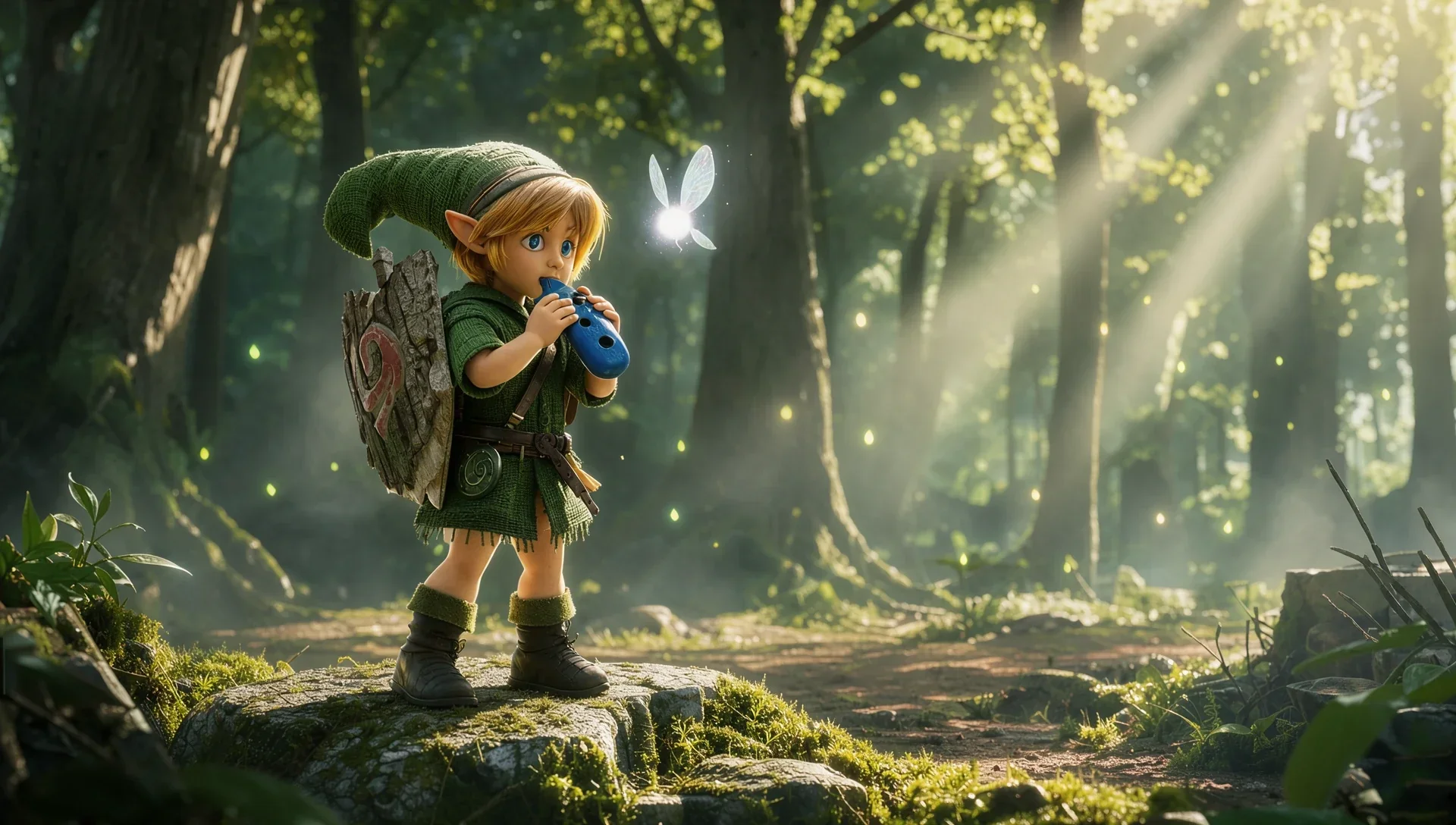
Art director Aya Shida says the team didn't simply want a realistic Hyrule. Early on they used phrases like "a puppet-show feel" and "the analog feel of practical effects films" to describe the target: a dense world that feels real, with the colourful, quirky characters still fitting into it.
The detail goes down to the cloth. To get Young Link's clothes right, the designers studied fabrics in museums and even made their own from thread, so his tunic would look like something the Kokiri children could have woven themselves.
In big areas like Hyrule Field, landmarks such as the castle and the windmill were deliberately enlarged, and places you can't reach get less detail, so the view feels vast without suggesting you can walk anywhere you can see.
Update, 3 November: what parts 3 and 4 add
Nintendo has now published the last two parts of the interview, on controls, dungeons and sound.
Rebuilt from scratch. Program director Hiroki Taguchi says the team didn't port the original's code and data: after 28 years, everything was recreated and compared with the Nintendo 64 game, over and over.
Controls for modern players:
- Jump anywhere: auto-jump is gone. Link now jumps with a button, as in recent Zelda games, which meant reworking the terrain (Young Link and Adult Link don't jump quite the same distance)
- Two ways to Jump Attack: the two-step jump-then-attack from Breath of the Wild, or a single button press like the original, added after producer Eiji Aonuma said the new version didn't feel as satisfying
- Dash or roll: hold the Roll Attack button to dash, or keep spamming rolls across Hyrule Field
- Free camera on the right stick, with tweaks so you don't lose your bearings when a dungeon door opens
Dungeons and bosses. The puzzles are the same, with small layout changes to make the way forward clearer. The Water Temple, famous for its difficulty, gets easier item switching, and some walls become lattices so you can see the rooms beyond. Aonuma, who designed it, calls it "overdue homework". The first boss, Gohma, now shields its weak point with its arms whenever it can't be hurt.
Threads of Time is a new feature that helps you along and tells the story like a picture book: illustrations and text unlock as you play and build up into a single tapestry.
Sound. The remake has more than 150 pieces of music recorded with a full orchestra, but simple tracks keep small arrangements, and some mix in sounds recreated from the Nintendo 64 sound source (listen inside Link's house). The game supports 5.1 surround sound, also through headphones on Switch 2. The ocarina is a recording of a real instrument and resonates differently depending on where you play it.
Voices. Iconic sounds like Navi's "Listen!" were kept. The Japanese cast was chosen in blind auditions, and one actor turned out to have voiced the same character in the Nintendo 64 version.
For newcomers, actions are introduced one at a time, and ZELDA NOTES adds an ocarina-playing mode and extra features for players who want to explore further.