NVIDIA Rubin HPC: A 50,000-CUDA-Core GPU for Science, Due in 2028
NVIDIA's Rubin HPC GPU, announced at SC26, packs more than 50,000 CUDA cores and NVLink 7 for scientific simulation. It's due in 2028.
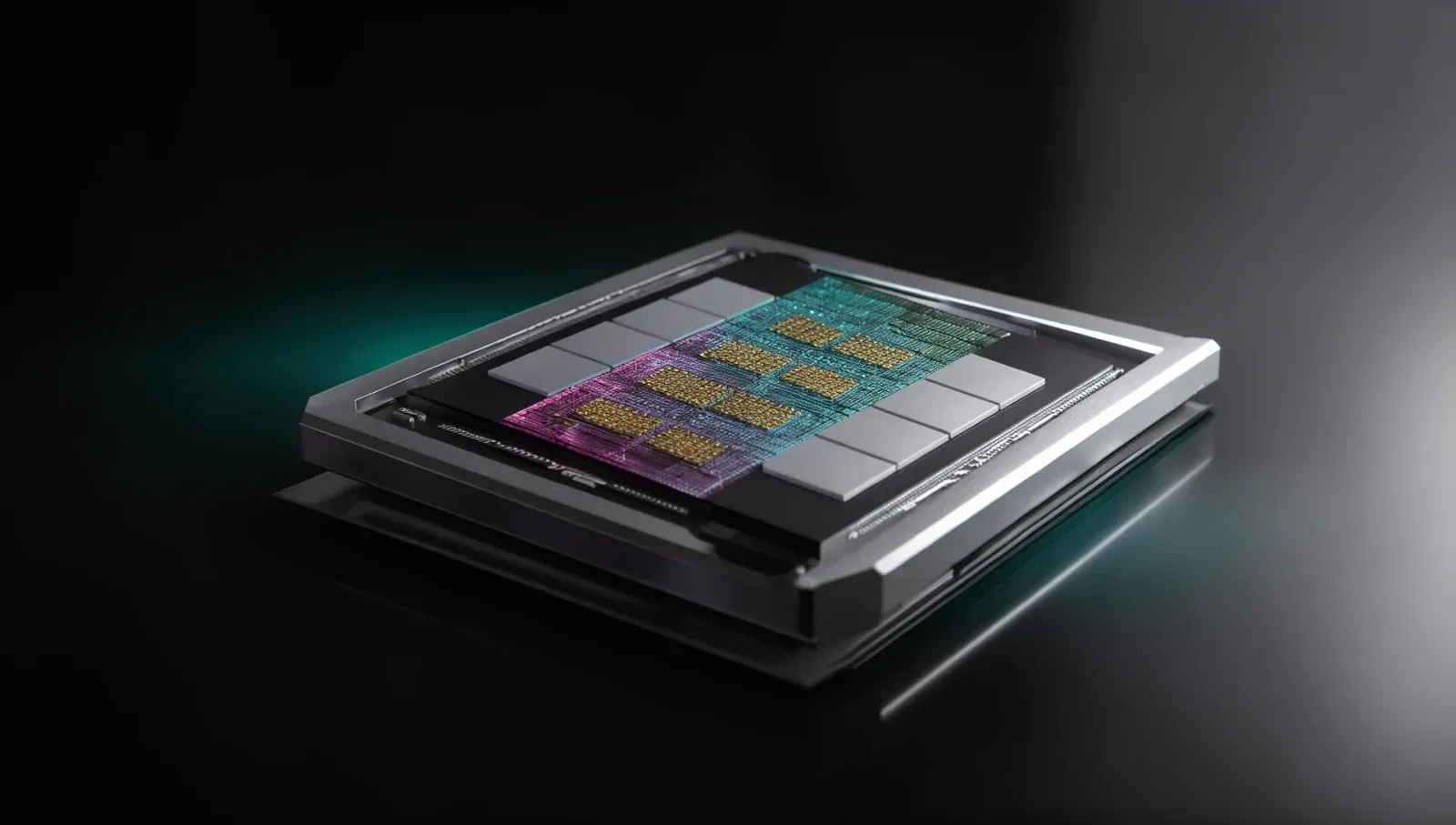
NVIDIA has announced Rubin HPC, a new GPU in its Vera Rubin platform built for scientific computing rather than AI training. Revealed on 16 November at SC26, the supercomputing conference, it has more than 50,000 CUDA cores, which NVIDIA says is a record for a single GPU. It's expected to be available in 2028.
What Rubin HPC is for
Most of NVIDIA's recent data centre chips have been sold on AI performance. Rubin HPC is aimed at the simulations behind climate models, engineering design, genomic analysis and financial risk. NVIDIA describes these workloads as having the same shape: a program reaches into a huge dataset, gathers a few scattered values, computes a result, and repeats that an enormous number of times.
The bottleneck there is often moving data, not raw maths. So instead of only adding compute, NVIDIA says Rubin HPC scales data movement and compute together, to keep its cores busy rather than waiting for data. That should speed up the common building blocks of simulation code: sparse matrix operations, stencil computations, sorting and reductions.
The specs NVIDIA has shared
- More than 50,000 CUDA cores on one GPU
- Sparse data acceleration, a feature that keeps those cores supplied with data
- Seventh-generation NVLink for faster GPU-to-GPU connections
NVIDIA hasn't given memory, power or performance figures, or a price.
Where AI agents come in
NVIDIA's pitch ties the chip to AI agents. As agents help researchers propose more candidate materials, molecules and designs, each idea needs a simulation to test it, so demand for simulation grows. "For agents tackling science and engineering, faster simulation means faster discovery," said Ian Buck, NVIDIA's vice president of hyperscale and high-performance computing. NVIDIA says its CUDA-X libraries give agents ready-made, optimised versions of these algorithms to run on the new GPU.
It's the same direction as NVIDIA's other recent research tools, from AI agents that steer a SETI radio telescope to robot and factory simulations built by talking to AI agents.
When it arrives
NVIDIA expects Rubin HPC to be available in 2028. It's a data centre GPU for supercomputing centres, labs and industry, not a card for gaming PCs.
Source: NVIDIA